Paisley Natural History Society reveal the best of Renfrewshire

A longstanding institution within Renfrewshire, delve into the world of Paisley Natural History Society and their work to promote the splendour of the local area
Paisley Natural History Society was set up in 1968 by local naturalists who sought to study and promote the interests of natural history in Renfrewshire and beyond.
Originally it was called the Paisley Museum Natural History Society, reflecting the close ties we have always kept with Paisley Museum. We also welcome staff and students at the nearby University of the West of Scotland, with lecturers contributing to our programme of talks.

Similarly, we are in close contact with the excellent rangers from the local country parks, where we often hold our outings. The local biodiversity officers have also been valued colleagues, while we also keep in regular contact with nearby Hessilhead Wildlife Rescue Centre.
For the first 50 years, we held our monthly meetings of talks in Paisley Museum prior to its closure for renovations in 2018. Since then, we now meet in The Wynd Centre in Paisley, being held on the first Thursday of each month at 7.30pm.
Our programme of talks starts in September and goes through to April of the following year, covering a wide variety of topics including plants and trees, local wildflower meadows and insects including butterflies and dragonflies.
- Barnhill Farm: a unique slice of rural life in Renfrewshire
- Renfrewshire: get into your local area and start exploring
- Gary Chittick captures the beauty of Renfrewshire
There are birds galore, mammals such as the Scottish wild cat, badgers and pine martens, fungi and lichens – especially in winter – peat bogs and other sites of special scientific interest including items of local geological interest.
Our meetings are friendly and informal, and we always leave time at the end of each talk to chat over a cup of tea or coffee.
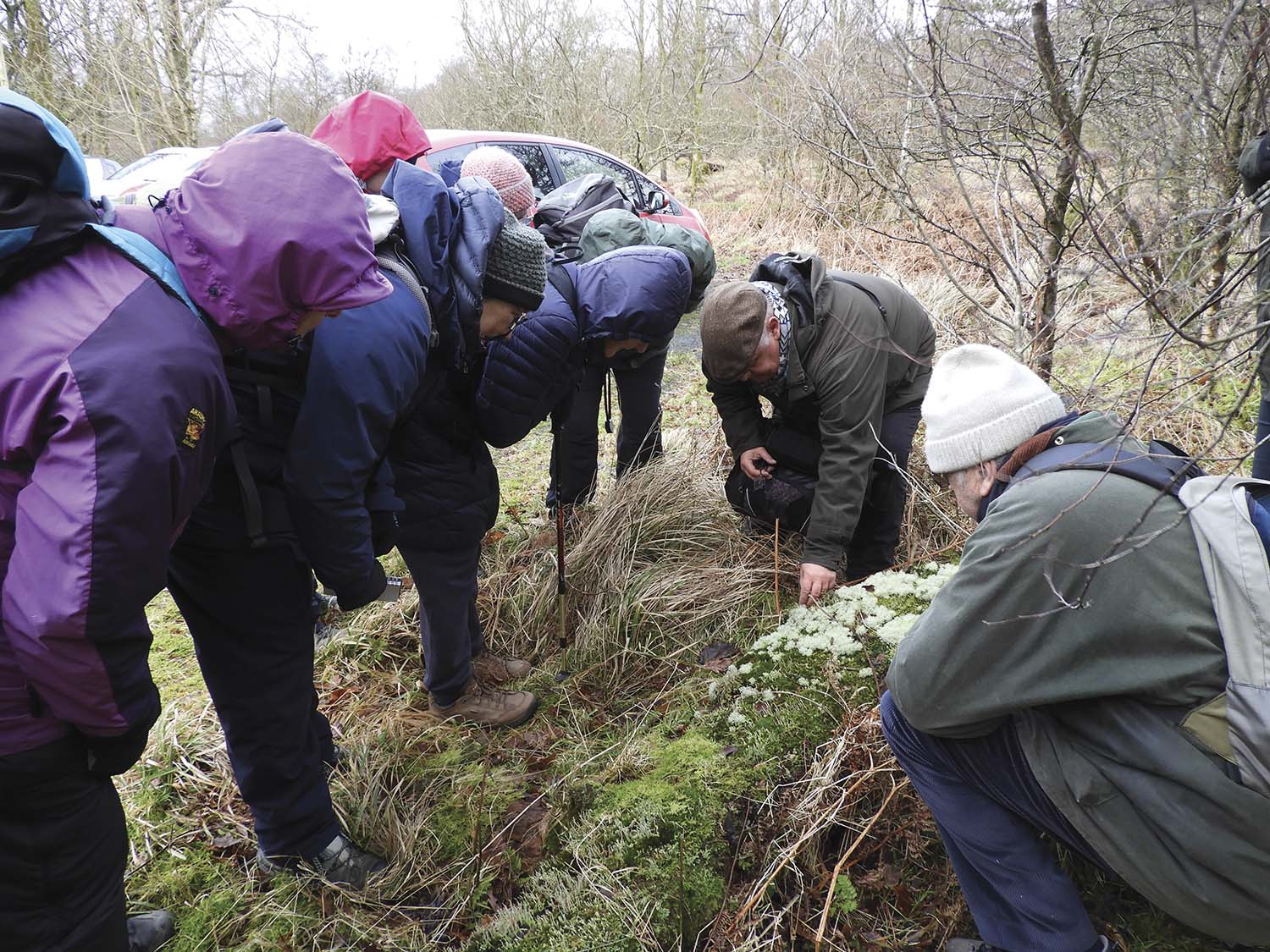
As well as our monthly lectures, we arrange a series of outings each year, mostly to local sites, but sometimes further afield. Recent outings include an evening beginners’ guide to a local wildflower site, an introduction to lichens, identifying trees in winter, and the search for the elusive purple hairstreak butterfly (pictured left).
Renfrewshire’s Natural Highlights
Around Renfrewshire, there are several local wildlife sites of interest, each with some special species or habitat of interest such as orchid-rich meadows, valuable peat bogs, native woodland areas or wildlife-rich river sections such as the Gryffe, the Black and White Cart and the River Calder.
Most of these were identified using wildlife information collected by our society many years ago and we have re-visited many of them over the years to expand our knowledge.
Some of the more ‘special’ sites are given extra protection as local nature reserves, such as Durrockstock Park, Jenny’s Well and Paisley Moss. We also have several “Sites of Special Scientific Interest” which is a national level of designation.
These include Formakin Estate (flower rich grassland) Glen Moss near Kilmacolm (a major wetland site), Whinnerston Braes (flower rich meadows) near Bridge of Weir and The Inner Clyde, which boasts mudflats, saltmarsh and coastal birds.
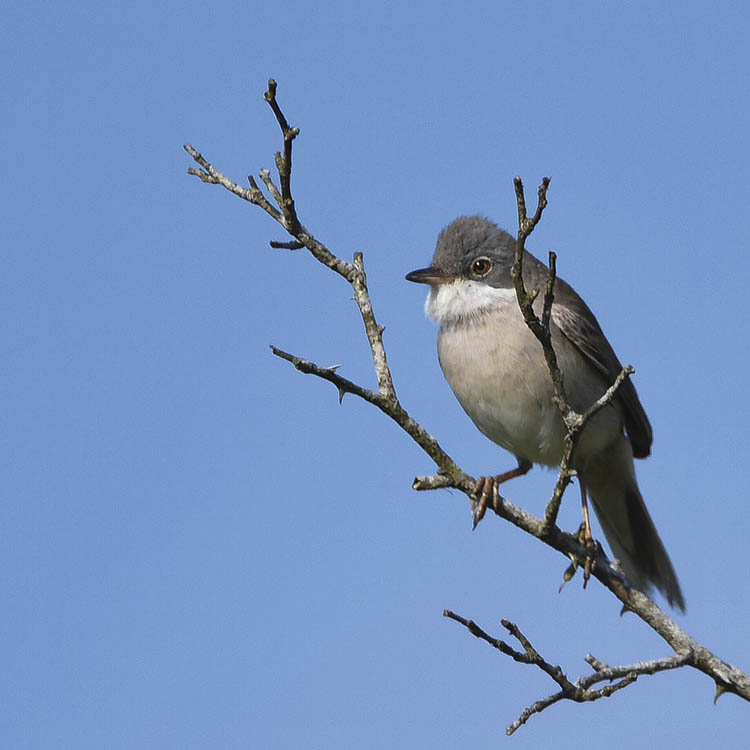
Lesser Whitethroat
The lesser whitethroat (Curruca curruca) is one of our rarest breeding birds in Renfrewshire with a population that never exceeded three pairs in the past but now limited to breeding intermittently at Brownside Braes within the Gleniffer Braes Country Park’s eastern boundaries.
Brownside Braes is classified as a Site of Importance for Nature Conservation (SINC) and made aware of this perilous situation. So, Renfrew District Council implemented a Species Action Plan (SAP) for the lesser whitethroat under the Local Biodiversity Action Plan.
The Paisley Natural History Society has been heavily involved with implementing a framework to monitor the lesser whitethroat and helped with setting up a scrub restoration habitat management plan at Brownside Braes.
Hopefully this new restoration project will create a “core” breeding site not only for the lesser whitethroat, but provide a biodiverse haven for other scrub loving species as well.
Gleniffer Braes Country Park
Gleniffer Braes Country Park runs along the southern edge of Paisley. It has a wide range of habitats for wildlife including mature woodlands, ponds, burns, and open rough grass areas. This variation provides lots of opportunities for lots of species.
The grasslands have orchids flowering in the summer and the woods have many specialist flowers and plants of shady areas. Meanwhile, there is a thriving bird population which includes breeding populations of nuthatches, jays, linnets and cuckoos. There are occasional visits in the summer by ospreys over the Glenburn reservoir and short-eared owls sometimes appear in the open grasslands in winter.
Around that same time, the Upper and Lower Mill Dams have been visited by kingfishers in the older areas of woodland and the exposed stone of the dry-stone walls are excellent areas to find lichens. These are a combination of a fungi and an algae or cyanobacteria living in a mutually beneficial, stable body which take many forms.
Glen Moss
This large body of open water on the eastern side of Kilmacolm is one of our richest wildlife sites. Its origins are in the period after the last ice age – which took place about 13,000 years ago – had retreated, leaving a large hollow which became filled with melt water and rain.
Gradually plants and animals returned to the area and slowly the edges of the loch became covered with boggy vegetation and the surrounding area became woodland. Today, the surrounding landscape is open farmland, golf course and housing.
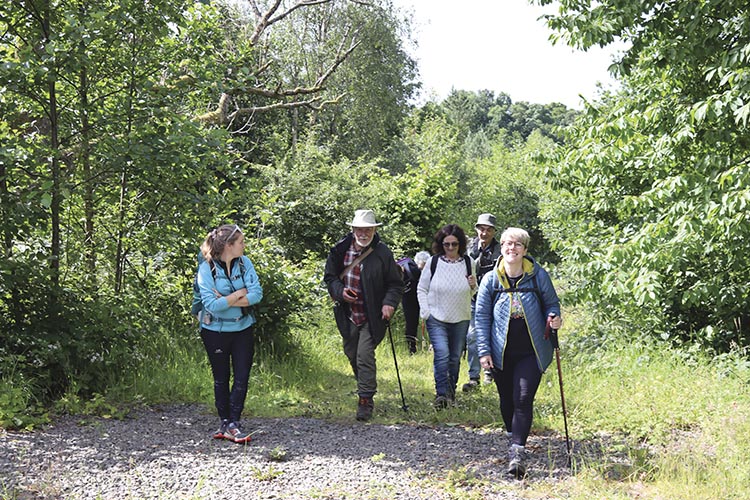
Despite these great changes the loch has continued unchanged, slowly filling up with aquatic vegetation and steadily reducing the amount of open water. Sometime in the future it will close over completely and become a large expanse of ‘floating bog’ –dense floating vegetation lying on top of some metres of water.
Playing host to important wetland wildlife – marshland flowers, sphagnum mosses, sundew insectivorous plants and more – Glen Moss also boasts a variety of dragon and damselflies. On top of being inhabited by rare plant species, it is a hotspot for thousands of young frogs hopping all over the place in summer.
Lochwinnoch
Lochwinnoch needs no introduction really; it has thousands of visitors every year, mainly to the lochside at Castle Semple Loch and to the RSPB Reserve with its wild birds, wetlands, and woodlands.
The new boardwalk, reaching out across the Loch to the Peel Tower, is an added attraction, giving a different perspective to the area. From the reserve, a footpath path leads to the village, with access and views of Barr Loch with more birdlife and on to Castle Semple loch.
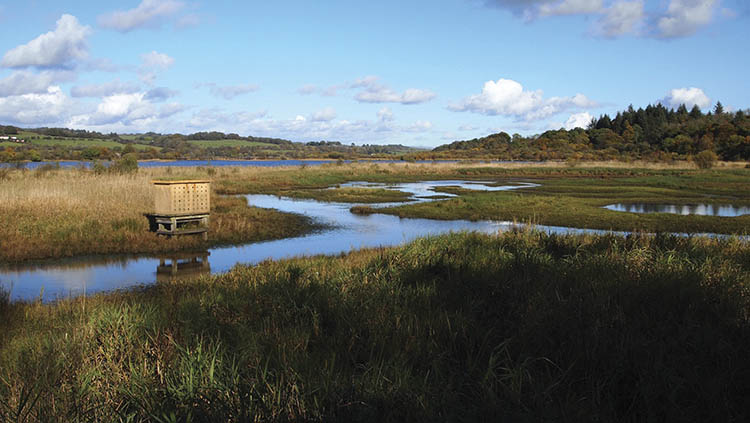
RSPB Lochwinnoch, photo ©Mill Magazine
Along this path there is opportunity to look out across the marshes, while in spring and summer, look and listen for several species of warblers, especially the grasshopper warbler which sounds like a spinning reel.
At the River Calder bridge, there’s always the chance of seeing kingfishers, dippers, trout, minnows as well as riverside flowers. The Calder flows down from the Muirshiel heights with access via Muirshiel Country Park through Calder Glen which, in its lower part, is flanked by the rich natural woodland with several rare plants.
Keeping on, the path towards Castle Semple passes along the edge of the loch, which is good for wildflowers and views of the ducks, swans and geese, all regulars at the lochside where they are well fed by visitors.
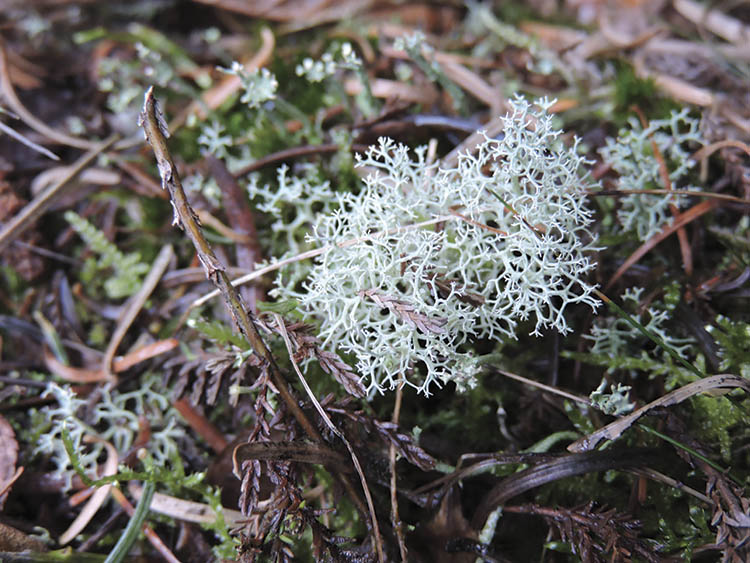
Cladonia portentosa
Occasional summer visits by ospreys are an added treat. From the centre, the Lochside footpath runs along the water’s edge until it meets the cycle path. At this point, there is also access to Parkhill Woods, another part of Clyde Muirshiel park.
A network of paths runs around this woodland site connecting with ponds, woodland areas, wildflower patches and small streams. The return visit, along the cycle path gives more time to listen and watch, especially in winter when this becomes a good spot to see Redwings and Fieldfares, members of the Thrush family, coming into Britain to escape the harsh Scandinavian winters.
Complete with a lovely clean river running down a natural woodland valley, Castle Semple Loch also harbours a large expanse of wetland which is home to a large variety of bird life as well as deer, hares, mice, voles and especially otters.
Jenny’s Well
Jenny’s Well is a Local Nature Reserve close to the heart of Paisley. It was established in 1996, incorporating wasteland, old allotments, quarries, and a previous landfill site. It’s a mixture of native woodland, riverbank, scrub, some wetland areas, and some areas reserved for recreation and dog walking.
There is a 2km (mostly) accessible path network around the reserve, and several places to sit and watch. There’s a good variety of birdlife, with over 50 species recorded. Kingfishers are a common sight, as are foxes, bats, roe deer, and even the occasional peregrine falcon!
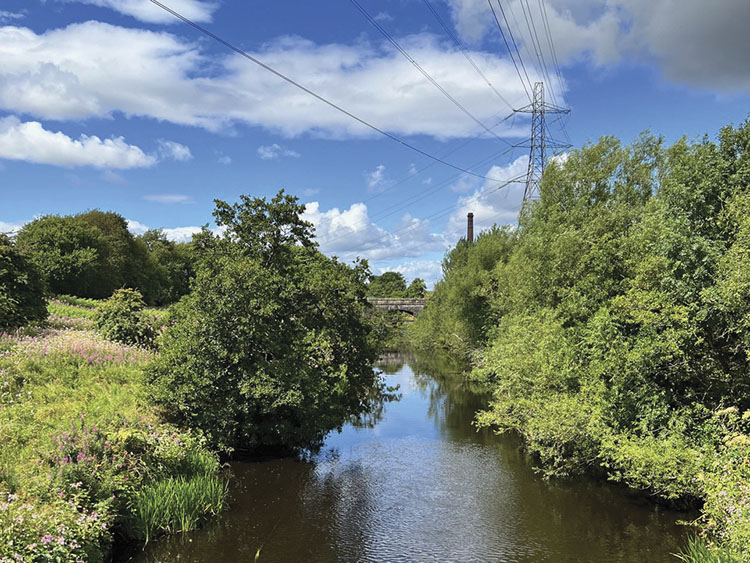
Jenny’s Well, photo by Matthew Smith
Wildflowers and fungi of many descriptions are to be found, depending on the season. The reserve is looked after by Friends of Jenny’s Well, a volunteer group who aim to keep the pathways accessible, and promote biodiversity with native bulb planting, invasive species management and the creation of bird and bat boxes.
Details of scheduled volunteer sessions can be found on our Facebook Group “Friends of Jenny’s Well” or people can get in touch by *********@*****ok.com“>emailing them.
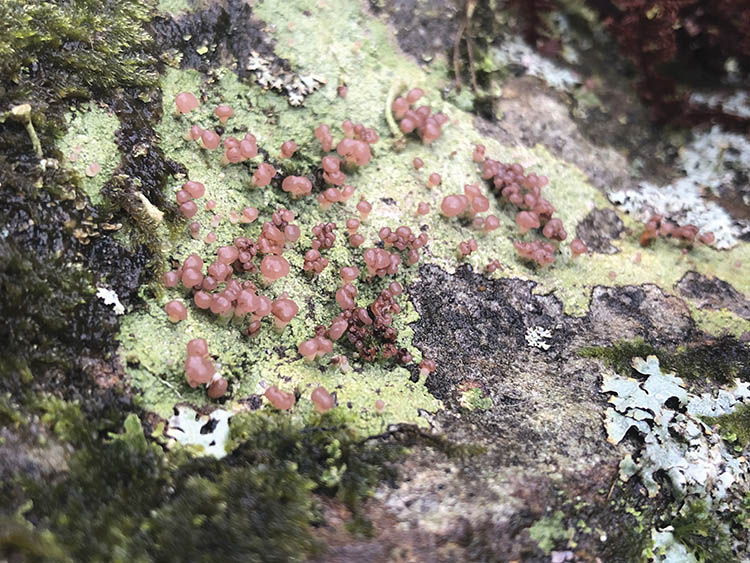
Beaomyces rufus
Play your part
Whether you are exploring wildlife sites or you’re just out your back door, it is really important to record the wildlife you see. You can do this through local/national recording schemes, such as the Glasgow Museum’s Biological Records Centre, or apps like iRecord, iNaturalist or BirdTrack.
The data you provide can help inform consultants, the local council and researchers about the biodiversity of an area and alert them to the presence of rare, protected or invasive species.
It can also help researchers monitor the nature crisis and impacts of climate change and inform decision-making in planning applications and conservation projects.
Records from Paisley Natural History Society members have been used to stop inappropriate developments on greenbelt land and are evidencing a current proposal for a new local nature conservation site near Dykebar.
If you’re not sure what to do, or get stuck on an ID, there are specialist social media groups who are all too willing to help and you can include PNHS amongst those.
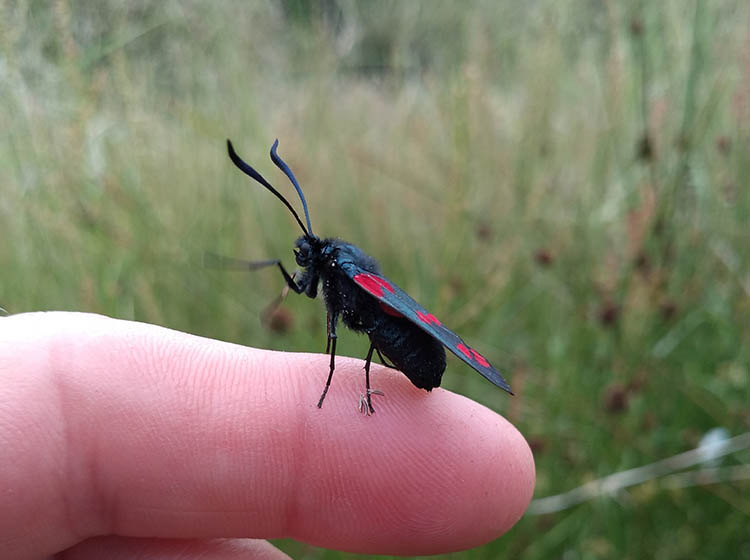
Six spot burnet moth found at Hurlethill
Paisley Natural History Society
Our society is a friendly group and we are always happy to share our knowledge with anyone who gets in touch. If you’re interested in joining, it costs £15 per year which can be paid in person at the beginning of each lecture year in September, or via our website. We look forward to welcoming you.
1 Comment
Is the meeting this month on 8th or have I missed it ? Was wanting to come along